Thursday, April 2, 2015

What I thought I'd do was, I'd pretend I was one of those deaf-mutes.

So this is it...the penultimate post on my less-then-stellar environmental communications blog. I hope you've enjoyed it as much as I have. Worry not, there's plenty of time for reflection in the next posting.

For now, I have to comment on what I feel lies in the future of Environmental communication. Throughout this course, we've examined green-washing, grass roots campaigns, and media framing, amongst many other topics. I center out those three in particular, because I feel they represent important developments in the overall field of communications. Framing allows messages to be altered without necessarily changing its contents. It's a result of our constant dependence on buzzwords that heuristically program us to unpack information in a certain way. This in turn likely arises from the information overload we face everyday. Buzzwords don't exist because some shadowy council in a dark room decided to brainwash the world. Rather, I feel our brains shifted to think a certain way in reaction to the threat of overburdening our brains to the point of collapse. Buzzwords just help us file the masses of mental stimuli we encounter in a memory efficient way.

Green-washing is the natural result of advertising firms realizing this reality, and researching ways to exploit it. Don't blame them, its all they know how to do. Green-washing utilizes the advent of buzzwords to sell products. It doesn't matter that said product isn't necessarily 'green'. All that matters to our brains is that certain keywords appear in out neural search bars that return thoughts, emotions, and concepts that these advertisers want. Its really just good business sense.

However, knowing that our minds are so easily manipulated doesn't sit well with most of the populace. I can't say I blame them for this either. We're raised to believe in free will. When that notion is challenged, be we get uneasy. Grass roots organizations are formed in opposition to the idea that powerful  individuals and organizations can manipulate our minds. A grass roots movement or organization is one that is purposely decentralized. No one needs to be on top, because everyone involved is already connected in some way. This lack of a central structure also helps combat forces of subversion and coercion.

All these things exist today because of the advances in our technology. Analytical programs can observe the web to pick out new buzz words, which fuels the perpetuation of green-washing. Social media helps connect the average person, allowing grass roots movements to form in opposition.

One question remains. What comes next?

For a possible answer to this, I will- strangely enough- turn to a Japanese author who goes by the pseudonym Masamune Shirow. He is best know for his 1991 comic series 'Ghost in the Shell'. This series depicts a near-future Japan, where cybernetic-augmentation becomes common place. Humans have computers implanted directly into their brains, and full-body prosthetics can heal all but the most horribly maimed. This series is lauded by critics the world over for its exploration of existentialism and speculative trans-humanist philosophies.

The metaseries also spawned a 2003 anime that follows its own storyline separate from the comic series. This animates series is title "Ghost in the Shell: Stand Alone Complex". It follows the exploits of the anti-terrorist group called Public Security Section 9. Although largely episodic, it does feature a continuous plot. This main plot involves Section 9 and their attempts to apprehend the 'super-hacker' known by the media as the Laughing Man. His apparent M.O. consists of targeting corrupt corporations with exposure and, having failed that, violence. The trouble in apprehending him stems from the fact that he is able to conceal his face with a personal logo by hacking witnesses' cybernetic eyes.
The Laughing Man's personal logo. Note the quote from The Catcher in the Rye that encircles it.
As Section 9's investigation continues, they discover that most of the 'Laughing Man' incidents are the result of copycat behaviour. However, when they final encounter the 'real' Laughing Man, viewers are surprised to learn that there never was a Laughing man to begin with. Rather, the almost-legendary terrorist was actually largely a fake persona created by social media and the traditional media. Even the original culprit wasn't an original himself. He started acting out the way he did to emulate already-existing rumours of a vigilante 'Laughing Man'.

In other words, every 'Laughing Man' was a copycat of a copycat, who in turn was copycating a non-existent entity. Therein lies the concept of the shows eponymous 'Stand Alone Complex'. As the series explains it, a Stand Alone Complex is a phenomenon where unrelated, yet very similar action of individuals create a seemingly concerted effort. Essentially, its a phenomenon of copycat behaviour without a real originator to copy. This event occurs out of thin air, then becomes a social force based on its own self-referentiality.

Although it originates in a work of fiction, the concept of a Stand Alone Complex can be utilized to explain examples of real world phenomena. Take for example, the 'hackivist group' Anonymous. They can be said to be a real life example of a Stand Alone Complex, as they appeared out of nowhere to expose and attack the cult of Scientology. There was no one originator of Anonymous, nor can their existence be traced to a single action. Its even debatable if 'Anonymous' is even a true organization. Rather than members working towards a single cause, one can argue that each individual within the movement acts within their own agency, creating only the appearance of a concerted effort.

Anonymous isn't the only possible example of a Stand Alone Complex. I'll link here an amateur academic thesis that explores this interesting topic, by providing many more examples before analyzing their impact on the evolution of the phenomenon:
http://projekter.aau.dk/projekter/files/60351886/StandaloneComplex.pdf

I personally believe that, as our dependence on social media increases, so too will the prevalence of these Stand Alone Complexes. As the existence of Anonymous shows, it is possible for whole social movements to spontaneously appear without prior direction. This is just the logical evolution from the concept of grass-roots organization. This possibility is very exciting for environmental communication...indeed for communication theory in general. These Complexes form out of communication media themselves. Anonymous exists because of online imageboards like 4chan, where like minded individuals meet, then unconsciously synchronize their action without central leadership, or indeed any preexisting plan.

Perhaps, in the near future we'll see the birth of an environmentally-minded Stand Alone Complex.

Manbearpig is out there!

Al Gore in one of his totally-not-satirical appearances on South Park 
Ladies and gentlemen. There is a threat that threatens our world threateningly.

That threat is the threat of

MANBEARPIG!!

Don't worry there folks, because the great Al Gore is on the case, to save the world yet again. He's back again, and this time he's super serial!

If that mass of pop culture references that I just spouted went over your head, you need to watch more South Park. Seriously, its good for you. Just make sure you don't have any pets or children under 18 around.

The show is notorious for its gravely offensive humour and foul language. In a single episode of South Park, viewers are likely to see some celebrity grossly satirized, some social movement or religion mocked, or the young character Kenny killed in a graphic way (don't worry, he gets better). Often, an episode will feature all three, and then some.

This kind of content is the reason why many people abhor the show and its creators, Trey Parker and Matt Stone. However, I'd argue this is why the show is so successful. Parker and Stone aren't afraid to show anything in their series. I'm super serial, guys. South Park openly mocks EVERYONE!

And by everyone, I mean everyone.

South Park isn't the only show that features offensive satire. However, they mostly all fall short in the subjects they're willing to lampoon compared to this show. Stewart & Clark (2011) laud South Park for it's "anti-authority, anti-elitism, and anti-hypocrisy themes" (p. 323). They argue that the show is popular because it is 'populist' in nature.

So what does this mean for environmental communication? Well, it should be no secret that environmentalists are commonly derided for being elitist snobs. Stewart & Clark open their essay by saying that "a significant threat to the success of the environmental movement is the behavior of its most outspoken supporters those who have embraced it 'in a quasi-theological way'" (p. 320).
In other words, elements of the environmentalist movement have adopted a certain sanctimonious nature that rubs nearly everyone else on the planet the wrong way.

South Park parodies these kinds of people, hoping, as Stewart & Clark argue, that proponents of environmentalism will wake up and realize the behaviors that turn people away from their message. They call this use of humour a "comic corrective" (p. 334), using parody to redirect purpose towards usefulness.

So, next time, you notice somebody acting like Al Gore, wearing figurative capes for figurative quests for some seemingly ridiculous cause like Manbearpig, point it out to them. You might actually wake them up to their unrealistic snobbery, and help them connect to their fellow human. Maybe then they can make a real difference.
  

"Paint that Picket green, Young Sawyer"

Green washing. Sounds a lot like brain washing, doesn't it?
The problem with environmentalism is that one can very easily misconstrue it as fad. Yes there are people who care about protecting our earth. Yes there are those that want to see our future secured, and the world a livable place for generations to come.

And then there are corporations. And their consumers.

I'd be lying if I said that they didn't have green initiatives. The only issue here is that said green initiatives focus on a....different form of green let's just say.

I'm talking about money. Corporations want to make money. It's just the way they are. Feudalism wants to keep the peasants in line. Communism want to make everyone equal beneath those who are more equal. And then Capitalism wants to make money.

How does one make money off of the 'green movement' without completely restructuring? Simple, all you need to do is pretend you're green without actually going through with it.

And people buy into it. After all, we Westerners have been indoctrinate within modes of consumption since we were born. I can say in my own experience that I don't often research a product before buying it. The fact is, I can't be bothered most of the time, and if the packaging says its so, it must be so. I don't think that I'm all that different from most others in this regard.

However, legitimate environmentalists take exception to the dirty tricks corporations pull with  green washing. The Eco-firm TerraChoice has released several documents on what they refer to as "the 7 deadly sins of green washing."

Here, I'll post the link to there 2010 document for any of you readers who are curious and want to attempt to change your consumption habits. This link outlines the '7 sins,' and should help you spot them next time you visit the supermarket.

Presto green-o: http://sinsofgreenwashing.com/index35c6.pdf

Art and the Environment

One of my particular interests is the intersection between art and the sublime. There's just something...well, Sublime about sublimity. From my understanding, the term sublime synthesizes the feels of quasi-religious awe with the basal sense of being overwhelmed. This concept is intrinsically tied to nature.

Turner's Launceston, Cornwall (1827)
Examine this image here. Note the overwhelming foliage, the interplay between harsh black and stark white. Yet, above all, look at the solitary figure. See how the rider appears so tiny and insignificant compared to the rest of the image.
Sublime art is all based around mankind's seeming insignificance in the world outside of its cities and homes.  It awes, disturbs, and enlightens us all at once.

Then there is the toxic sublime, embodied in the work of Edward Burtynsky. He's a photographer from Ontario, who's work showcases the destruction and interruption of the natural environment, as seen through strip mines, junkyards, and vast oil spills.

Like traditional notions of the sublime, Burtynsky's work focuses on the interaction between humanity and its environment, It makes great use of contrasts and images of titanic immensity.

However, the biggest different between toxic sublime and its parent is that the landscapes featured are the result of human hands and human ambitions.

In the words of Peeples (2011): "in contrast to the sublime in nature, which functions to improve moral character...the horror of the toxic sublime calls to question the personal, social and environmental ethics that allows these places of contamination to exist."

From Burtynsky's Manufactured Landscapes (2006)
Above is an example of Burtynsky's toxic sublime artwork. Again note the size difference between the immense ship compared to the people. There is also a contrast between the rust brown of the earth and the bright blue of the sky. The difference between this work and other examples of the sublime are the lack of 'natural' life. The environment is dominated by artificial decay, not the wild unknown.

Toxic Sublime offers an interesting spin on an established art concept, while also giving its viewers a message. Clearly, we are not meant to fear nature, as in earlier examples. No, here we are meant to fear FOR nature.

Thursday, February 26, 2015

On the Environment Through the Lens of Tourism and Entertainment

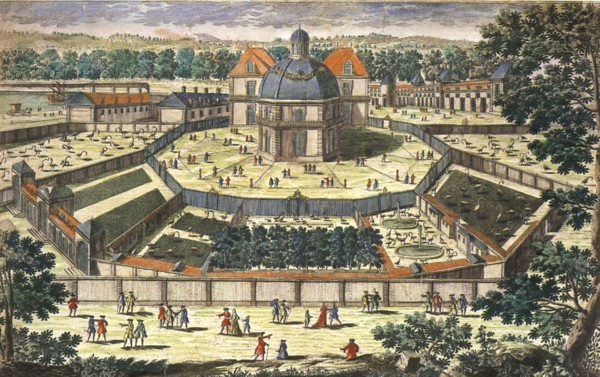
The Versailles Menagerie- 17th Century Coloured Copperplate Print
          Milstein (2009) claims that zoos are surrounded by a myriad of conflicting discourses within modern society. She identifies three main opposing binaries within her article. These binaries are: Mastery-Harmony, Othering-Connection, and Exploitation-Idealism.
          The first of these pairs- Mastery-Harmony- is easy enough to understand. On the one hand zoos have been traditionally spaces that display mankind's dominance over the natural world through the containment of wild beasts behind cages. During the late medieval period and onwards, the monarchies of Europe owned illustrious menageries populated with all manner of animals, both domestic and 'exotic'. For a time, even the infamous Tower of London was the site of Henry VIII's personal zoo. Then, as Milstein explains, "European colonists [in the New World]... brought with them a mastery-oriented way of seeing and acting upon the human place in the natural world."
          In other words, western Rationalist thought places mankind as the most important power on the planet. As Europe colonized the world, the Europeans brought symbols of this ideology with them. And one such symbol is the zoo.
          However, as Milstein puts it
[there also was] a countertheme within mainstream Western discourse, one made familiar in the late eighteenth century and nineteenth century writings of Thoreau, Emerson, and Whitman in the USA and of Wordsworth in England, that of valuing harmony with nature married to the belief that industrial progress threatens to disrupt such harmony.

This idea of harmony lends itself to notion of the zoo as a site of the preservation of the natural world.
          I would argue that the other two dialectics each find their origin in this first binary opposition.  The Mastery philosophy, by positioning man at the apex of the natural world gives rise to both the idea of nature as an alienated 'Other,' as well as justifying the ability to exploit it. We see both of these discourses written in to the zoo. The former discourse is easy to see in the way animals are kept in enclosures, to keep them away from the zoo patrons. This makes an Other, and clearly delineates the boundary between  both parties in a physical way. At the same time, these enclosures are built to allow us humans the ability to voyeuristically observe the animals. We exploit these animals for our own visual pleasure. We can justify all of this by reminding ourselves that humanity has mastery over the natural.
         Conversely, others could just as easily apply the harmony philosophy to their experience at the zoo. Rather than see the enclosures as static boundaries, many go right up to the animals in question to try and see if they can get its attention. This is not to tease the animal. Often the zoo patron want to communicate and forge a bound of some kind to the animal. In this way, Milstein argues, zoos can also be places of Connection to nature, providing close encounters that would be otherwise impossible. All of this is caught up in an air of Idealism, and Idealism that sees the zoo as a positive space. Those who subscribe to this Idealism relate to animal in an altruistic- rather than Exploitative- way. This cannot be possible without one possessing some sense of harmony with nature.
         Although Milstein only applies these sets of dialectics towards the experience of a zoo, I argue that one can easily extrapolate these concepts to other forms of 'eco-tourism'. Next time you find yourself visiting some unfamiliar environment, interrogate your motives. Are you climbing that mountain simply because it's another challenge to overcome, or are seeing it as a way to grow a deeper understanding of your place in nature? You could be photographing those birds because they are exotic fauna to fetishize. Conversely, you may have forged an emotional connection to them, and those pictures are there to memorialize that experience. You could easily see that tropical sunrise as a purely visual pleasure, there for you to exploit, but you could just as easily contemplate the deeper meanings and loftier ideals that drive you to that experience.

Thursday, February 12, 2015

After the Pause.

So, as one can see, I haven't exactly updated this blog in a while. I assure you, this is unintentional. I've been rather busy with both life and school, and unfortunately I let this run into the wayside. I'm going to try and keep up with the blog more regularly from on, however. So worry not!
I can't exactly promise a fully researched mini-essay each week, but I can write brief-ish responses to each set of readings and lectures/seminars for each week. It is now my goal that I will publish a post after each lecture period, every week. So, with that in mind, this post won't be counted as the weekly one for this week. I will begin writing it after this is published.
Think of it as a PSA.


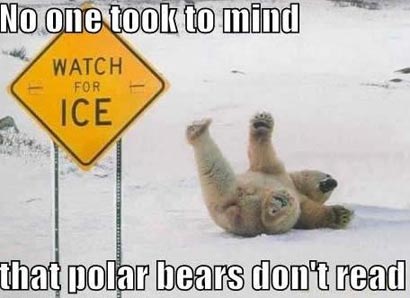
In the mean time, enjoy this example of civilization and the environment colliding:


Image from http://iwannagetphysical.blogspot.ca/2009/03/friday-funny-27-those-stupid-animal.html

Thursday, January 22, 2015

Partisan conflict and Environmental Communications

Oh boy. Let's start with the big one. Let's get it out of the way.
Let's talk about how environmental communication is largely politicized and how that politicization makes everything worse for everyone.

Lakoff is very right in his theory of 'framing' in his article Why it Matters How We Frame the Environment (2010). Human cognition works by making links between concepts present in the mind. You can teach someone to associate words with certain feelings, thoughts, or memories by repetitive enforcement. He also rightly points that partisan politics are very strong frames, especially in the US with their [sarcasm]oh-so-efficient two party system [/sarcasm].

Yep, those darn Republicans and their cognitive framing. They immediately shut out any idea that might help the environment because of years of indoctrination. Yep, damn them and their ideology for sure.

To Lakoff's credit, he's not wrong. American Republicans have this bad habit of mentally shutting out anyone from the other party has to say on principal. However, Lakoff conveniently ignores that Democrats DO THE SAME THING. Every political piece that one reads can be reduced to "damn those [insert party name here] and their stupid [insert political ideology here]-ism."

This sense of tribalism prevents anything from getting done. Good ideas barely survive because one party wants to shut it down because the other party thought of it. Just look at the social healthcare, which still remains inexplicably controversial due to Republican interference (ok, I admit, that's a bit of an over simplification). Look at the abolition of slavery, which certain democrats started a civil war over(ditto here too)!

I do like where he laments over environmentalism being turned into a 'political issue,' but by-and-large Lakoff just plays into the trap of politics. Some people labour over their contention with 'gender binaries,' I find issue with 'political binaries'. Lakoff over uses that Conservative-Liberal binary, labelling those he likes as Liberal, and those he's trying to counter as Conservative. The truth is...nobody on this earth can be boxed into either of those categories (or even shoehorned into a 'political spectrum,' but that's a discussion for another time). People can think for themselves. Framing is an observable phenomena, but I feel as though Lakoff sees it as the end-all and be-all of human communication

Call me an anarchist, call me a libertarian, call me whatever. Environmental change starts with you, not with some politician who's face you only see during election time or publicity events. I am apolitical for the simple reason that politics don't work all that well. I know that I can't be simply slotted in somewhere along a political spectrum. No one ideology can represent my thoughts on anything, let alone the environment. Indeed, no one political party should represent the environment. In the end, if you make the environment a matter of politics, it's just going to be lost and forgotten in the gridlock.